
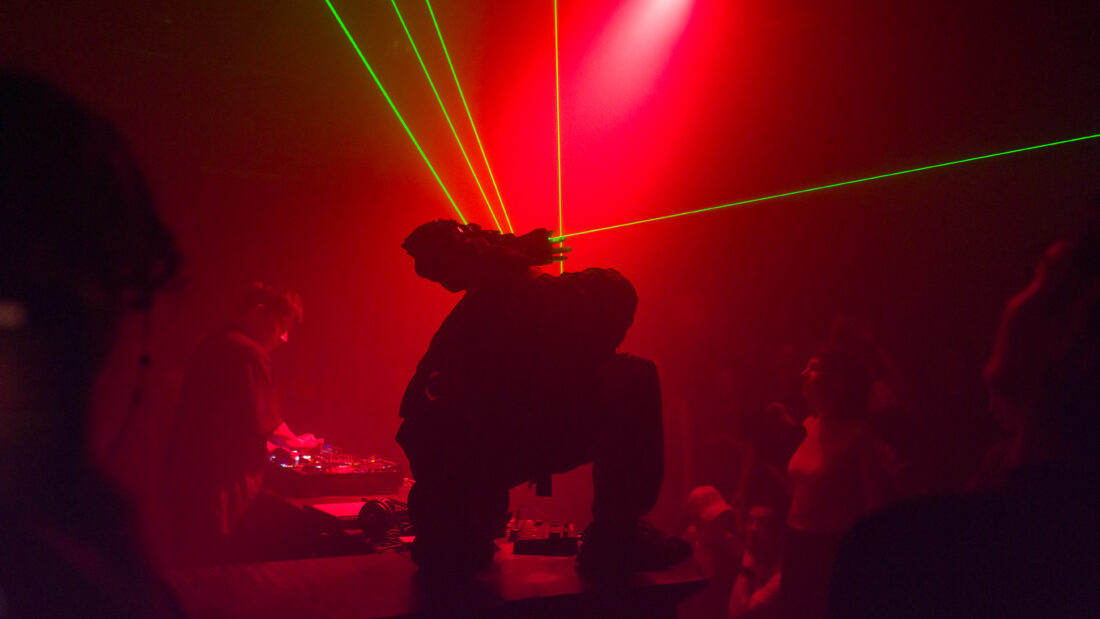
Ican Harem and Kasimyn of Gabber Modus Operandi were perched onstage at the far end of the concert hall. Kasimyn stood behind a DJ setup; Harem crouched, a microphone in one hand and a handheld laser glove in the other. The sound that the Bali-based club duo has become known for—a high-BPM blend of grindcore, gamelan, and noise fused with distorted vocals and gritty electronics—filled the room, the visceral energy of the audience’s movement palpable in the air and in the floorboards.
Gabber Modus Operandi was one of three Indonesia-based acts to perform that night last October, on the Friday show of the Music Gallery’s eighteenth annual X Avant festival in Toronto. The bill also included films by Riar Rizaldi and Natasha Tontey, a performance by Sumatran vocalist and composer Rani Jambak, and a DJ set by producer and arts community organizer Woto Wibowo—better known as Wok The Rock, or Wok—who runs the Indonesian netlabel Yes No Wave Music.
Entitled “and i was like woah! \(〇_o)∕,” the show was part of a five-stop, eight-day tour, developed by Wok and artist Aki Onda to showcase artists from Yes No Wave. Similar shows were presented by Winnipeg’s send + receive festival, Art in the Margins in Montreal, Debaser in Ottawa, and Vancouver’s Western Front, where Onda is a curator. The structure of the tour—which stopped at experimental-arts presenters across Canada—is rarely seen these days, as the distances are often financially and organizationally prohibitive for artists to traverse. The organizations’ collaborative rise to the challenge, though, feels analogous in spirit to the ethos of Yes No Wave. Founded by Wok in Yogyakarta in 2007, the label seeks to unite disparate artists and scenes from across Indonesia and connect them to broader audiences and artistic networks.
Indonesia is the world’s fourth most populous country, spread across thousands of islands; it follows that the music scene is really diverse, Onda tells me during a video call after the tour. “In a sense, that’s what Yes No Wave represents musically as well. They’re based in Yogyakarta but they introduce different kinds of artistic practices, from different regions. It made sense to me to bring that here.”
Onda met Wok in 2015 when he was working as a curator for the Yokohama Performing Arts Meeting (YPAM), an international platform for Asian artists, and they’ve stayed in touch over the years, occasionally floating proposals for Onda to return to Java, or for Wok and the artists he works with to tour in Canada or the United States. Once Onda began working at Western Front, those tour plans took shape. Together, Wok and Onda curated a lineup featuring Gabber Modus Operandi, Jambak’s soundscape-focused practice, and Java-raised, Lithuania-based composer and experimental instrument builder J. “Mo’ong” Santoso Pribadi (although visa issues prevented him from travelling to Canada for the tour), as well as three short films by Tontey and Rizaldi that interrogate cosmologies, technologies, and histories with deep local roots.
“I wanted to show that kind of locality and also the kind of global sense of the contemporary arts scene in Indonesia right now, [and] to present the depth of that context,” Onda says. “Because if you think about the [Indonesian] experimental music scene, what is known in Western countries is just the surface.”
In 2007, on the day it was launched, Yes No Wave Music released seven recordings online for free download. The netlabel has remained DIY and staunchly anti-capitalist ever since. More than 100 albums are listed on its website, all released digitally under a non-commercial Creative Commons Licence, which means the music is available to download, copy, distribute, and remix free of charge. “Wok’s vision for the label reflects his actual stance toward globalization, toward colonization,” Onda says. “He tried to open up something from the underground scene. Even though there’s some more institutionalized funding for organizations in Indonesia these days, Wok’s organizing practices are still quite DIY.”
Wok was born in Madiun, Indonesia, and moved to Yogyakarta as a teenager in 1994 to pursue university studies in graphic design. He joined the local punk collective Realino Bootbois, which ran the affiliated label Realino Records in the early 2000s. In 2002, he became a founding member of the artist collective Ruang MES 56, which hosted shows and exhibitions at their artist-run gallery space.
Wok explains that the political climate of the late 1990s and early 2000s in Indonesia—with the ousting of president Suharto in 1998 after his thirty-two-year dictatorship—led to a proliferation of underground arts scenes and genre-fluid DIY organizing. “At that time, underground music scenes such as punk, indie rock, death metal, industrial music, hip-hop, and electronic music were developing,” he says. “We learned how to organize these subculture movements with minimal resources—how to produce albums and release them, organize gigs, publish zines, build and expand networks.”
Wok tells me that after the Indonesian National Revolution in the 1940s, music from Western, or imperialist, countries was initially illegal, and that musicians interested in genres like rock ’n’ roll had to carefully blend the music with local or traditional sounds. “The political direction changed drastically after the military coup d’état in 1965, when thousands of leftist artists, thinkers, and educators were massacred,” he says. “The new neoliberal military government opened up [to] the West in favour of national economic growth, but any leftist or radical ideas were totally controlled. There’s always [been] a debate of West and East, and a resulting West-East mixture. You’re a cool kid if you play U.K. drum-and-bass music, and you’re an outdated kid if you play dangdut koplo [local dance music from Java] or gamelan.
“The military dictatorship was thrown down during the Asian economic crisis in 1998, but the ‘West versus East’ discourse is still going on,” he adds, referring to the musical environment that gave rise to Yes No Wave Music. “The underground music scene in the late 2000s started to mix anything we learned—West, East, modern, traditional, popular, and experimental—in an extreme, critical, but also fun way.” The description could easily be applied to several artists who have released music on the label. Gabber Modus Operandi’s two Yes No Wave releases purposefully tap into a multitude of styles: punk, funkot, dangdut koplo, jathilan, gamelan, metal, and noise. Also supported by the label, the internationally renowned duo Senyawa—vocalist Rully Shabara and instrument maker Wukir Suryadi—owes its signature sound to improvisations on Suryadi’s invented “Bamboo Spear” instrument: an amplified bamboo stem strung with percussive strips of animal skin and steel strings that fuses traditional musical ideas with guitar-like distortion.
At the same time, Yes No Wave feels less tied to any particular form of music-making than it does to mobilizing the collective power of various types of experimentalism—with a deep sense of solidarity woven throughout. “We have a communal or collective tradition,” Wok says. “We have a hot and sunny climate all the time. We need to open the doors and windows and go out. We are also ruled by colonialism and a corrupt government, for centuries. There is an urge to help each other to survive.” That communal tradition has developed into a political movement that Wok aspires to embrace in his work. “I want more people to be open to learning about diversity and solidarity. That’s one of the ways to survive—and be happy.”
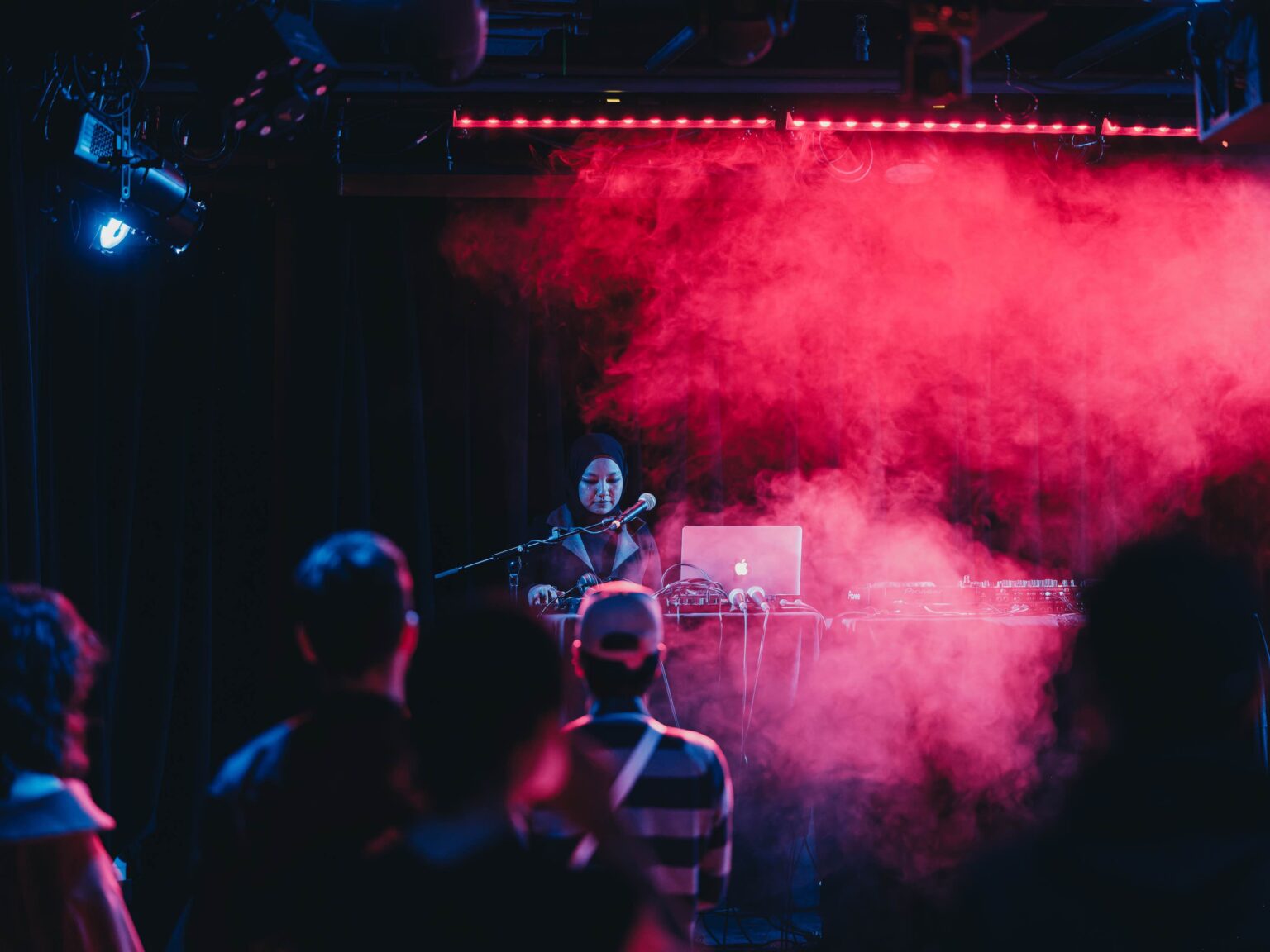
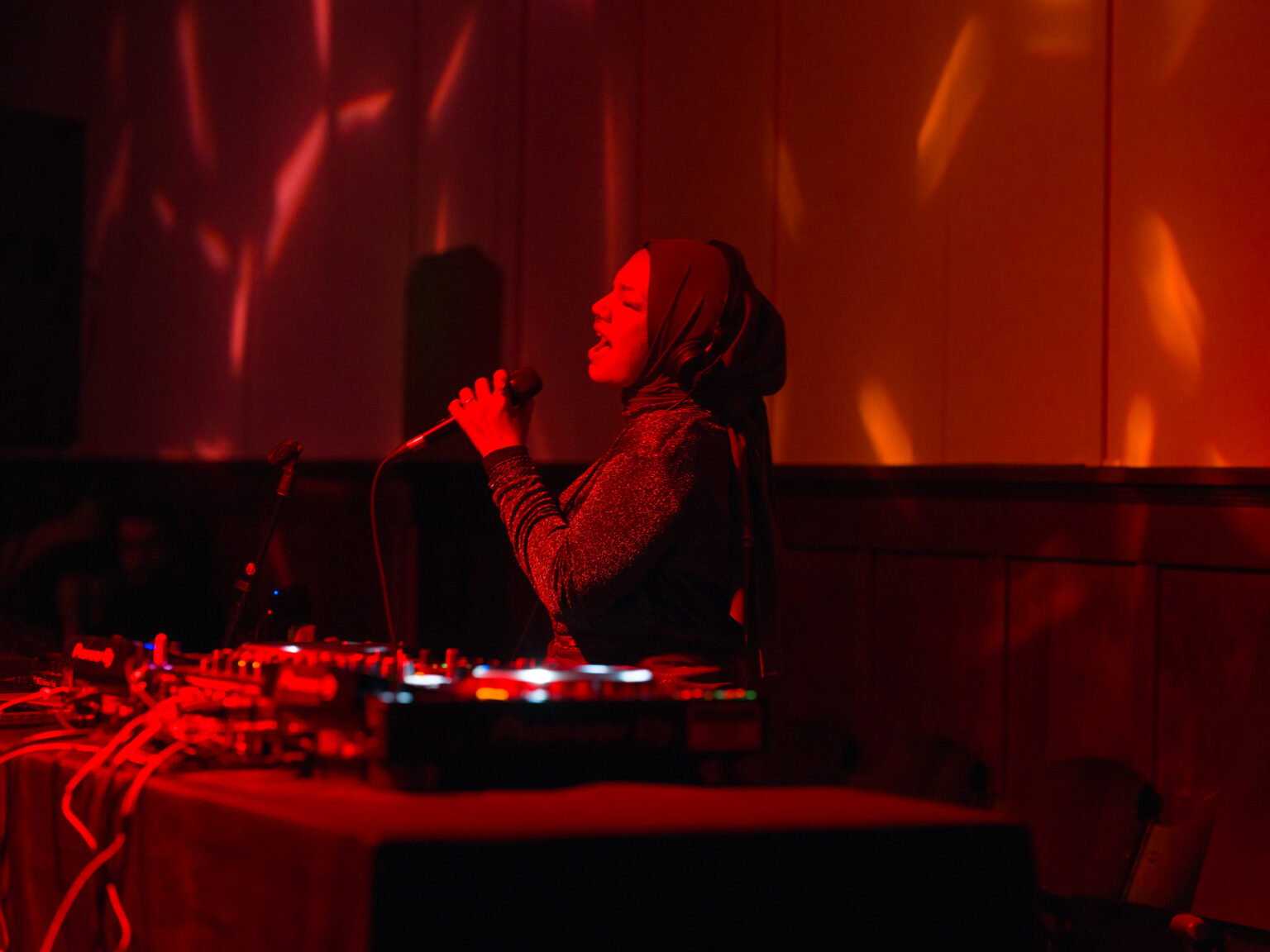
When I connect with Rani Jambak in December 2023, she has just moved from her hometown of Medan, in North Sumatra, across the country to Solo (Surakarta), an hour outside of Yogyakarta. While Yogyakarta is a more central hub of the Indonesian arts scene, Jambak tells me that her upbringing in Sumatra and more general ideas of place strongly inform her music. “I started my own music as an environmental campaign,” she says during a video call. “The first song I wrote—‘Nature,’ in 2018—[talks] about plastic pollution. Writing about these environmental issues is really important for me . . . including issues that are specific to Sumatra, because I was born and lived [there].”
At her set in Toronto, that sense of locality was palpable. In one track, deceptively upbeat electronics served as a foundation for thick layers of live vocals, with the lyrics expressing condemnation of slash-and-burn agricultural practices; in another, close-miked field recordings of flowing water offered a more introspective reflection on how sound can serve as an archive for a place and its histories.
Jambak sang in various punk, rock, and metal bands while in university, but it was through studying recording while pursuing a master’s degree in creative industries at Macquarie University in Australia that she first considered developing a career in electronic music. Working with an Ableton Push controller, she began to experiment with recording local sounds, then sampling and playing them back live. “I didn’t really have the confidence to compose at the time,” she explains. “But I felt like it was a challenge, so I kept pushing myself to listen more, to compose more. When I finished my studies, [I decided that] I wasn’t going to continue singing with a band. I wanted to perform solo, with my own music that I create.”
After graduating, Jambak delved into her solo practice. At home in Medan, she launched Medan Soundspectives, a cultural festival showcasing the acoustic diversity of the region, and started releasing songs—at first under the umbrella of her environmental platform #FORMYNATURE, and more recently as the series #FUTUREANCESTOR, which highlights the links between her cultural roots and her approach to listening. “I was born and live in North Sumatra, but my bloodline is actually Minangkabau, from West Sumatra,” Jambak says. “In my childhood, I never knew about the Minangkabau [people], but in 2013, I started to search for my roots—collecting all the information [I could] about Minangkabau history and culture. #FUTUREANCESTOR is about that ancestral knowledge—how every piece of music that I’ve written until now is related to that cultural sound, and how I can connect [with my ancestors] by having a deep understanding about the history of the sounds that I’ve recorded.”
During a virtual residency with the U.K.-based Huddersfield Contemporary Music Festival in 2022, Jambak created a musical instrument that was a wood and steel re-creation of the kincia aia, a traditional waterwheel used historically in Minangkabau communities to pound grains into flour. In videos of her playing the instrument, the wheel spins in order to power a series of rectangular wooden pestles, each fitted with electronic sensors that track and translate their movements into sound. “Building this instrument was a way for me to find my ancestors, physically: the legacy of thinking, through how they created systems [in] society and connected with their nature.”
During the pandemic, Wok invited Jambak to perform as a part of a virtual concert he was curating. Later, in April 2023, Yes No Wave released《O-ksi氣-2》(OXYGEN), a collaborative endeavour between Jambak and Taiwanese artist Yenting Hsu. The album, which was created during an online residency project at Taipei’s Open Contemporary Art Center, is rooted in field recordings made by the artists in their respective hometowns, and mixed and traded between them. On “Leuser Wave / Ombak Leuser / 勒塞爾浪潮,” the opening track of the album, swirling seaside and rainforest sounds spill over each other, rising and falling with a subtle lilt. “Sound is not just sound,” Jambak says. “It has many different stories to tell about location, or maybe some psychological or cultural background.” As the track progresses, the samples gradually coalesce, first into a slow-moving band of sound with soft, almost major-chord underpinnings, and then into a mass of full-spectrum, drone-laden noise.
“At the end of the day, we’re all facing the same problems, and we are searching for the same things,” she says.
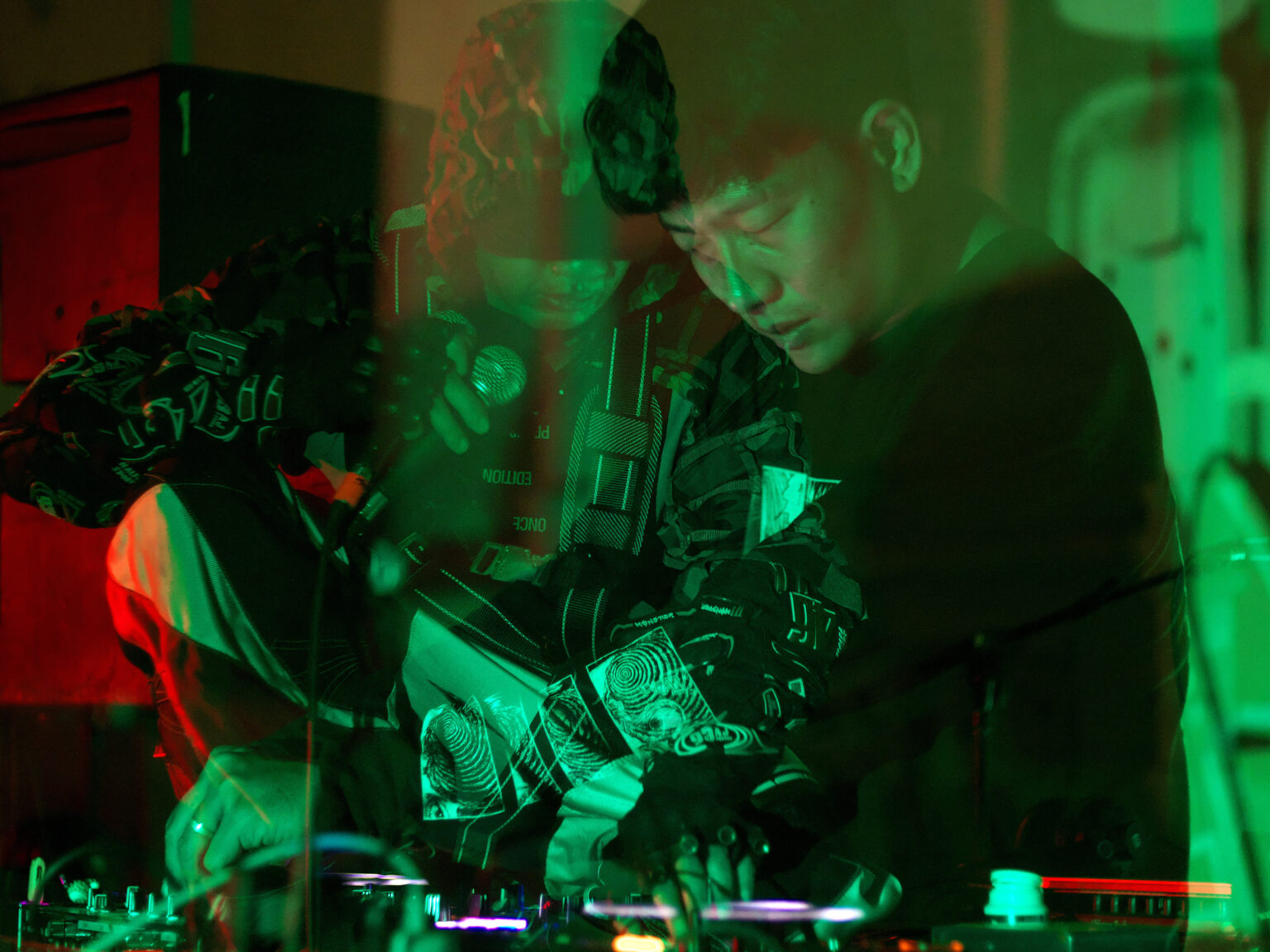
When Gabber Modus Operandi’s Aditya Surya Taruna (DJ Kasimyn) and Ican Harem first started working together, they intended to act as selectors, playing Top 40 pop music at events. “One day, I brought a bunch of metal and punk rock records that I wanted to play, but Kas instantly put on dubstep music on high-BPM, pitching everything,” explains Harem from his home in Denpasar, Bali, during a group video call. “Suddenly, the music got this new sound and new energy. So we continued the project [that way].”
As they went on, they continued to add extra layers of experimentation, searching for a musical energy that made them feel at home. They began by drawing from Harem’s musical background in electronic black metal and Kasimyn’s in indie rock. Later, they did away with focusing on chromatic and Western tuning systems, instead incorporating Indonesian pentatonic tuning systems like those used in gamelan music.
“When we started, what both of us really had in common was club music,” Harem says. “Both of us were club music kids, subculture kids, coming from that grassroots intensity and inspiration. I think that will always be the character [of] our sound.”
The duo’s debut album PUXXXIMAXXX was released on Yes No Wave Music in 2018. The nine brief tracks have a relentless, almost ominous edge to them: Frenzied melodies are fused with high-BPM industrial percussion. As they shift from one texture to another, each element seems to slot perfectly into place without ever feeling too static or comfortable—it’s music that’s easy to move to. “We’ve been friends [with Wok] for a long time, and we understand the direction that Yes No Wave is going in,” says Harem. “If you’re checking the catalogue, you can find black metal bands as well as really traditional, really pop, and really contemporary ones. It’s as if Yes No Wave is leaning [toward] us: the ethos of celebration of the grassroots and a kind of celebration of the new—and the possibility to bring that new sound into the future.”
The duo released a second album, HOXXXYA, on the Shanghai label SVBKVLT in 2019, and has risen to global popularity, performing at experimental music stages like CTM Festival in Berlin and Nyege Nyege Festival in Kampala, Uganda, and contributing to Björk’s 2022 album, Fossora. “Synthesis” is what Kasimyn calls it. “For us, our music is a tool to synthesize a lot of stuff. There’s not only synthesized sounds: We synthesize the dance. We synthesize the communal space. We want a space that we create, the whole complexity of it.
“Over the last four or five years that we’ve been doing this, we reached the point of being aware that we can play with a lot of stuff,” he continues. “It’s beautiful to be aware that traditional and contemporary [ideas] and technology can exist at the same time.”
Their trip to Canada was bookended by other tour dates in Europe and across the U.K. What they aim for in their shows is a kind of democratizing feeling of communal gathering, where performers and listeners alike have a place to pour their energy into, and to be themselves. “In many traditions in Bali, if you see ritual or performance or theatre, there’s no boundary between the audience and the performers,” says Harem. “It always becomes one: There’s some chaos, and then harmony. We want to see and bring that expression and energy.
“I think the word would be ‘home,’” he adds, after a pause. “Because when you open your home to everyone and everyone enters it, it becomes a joyful, welcoming kind of space.”
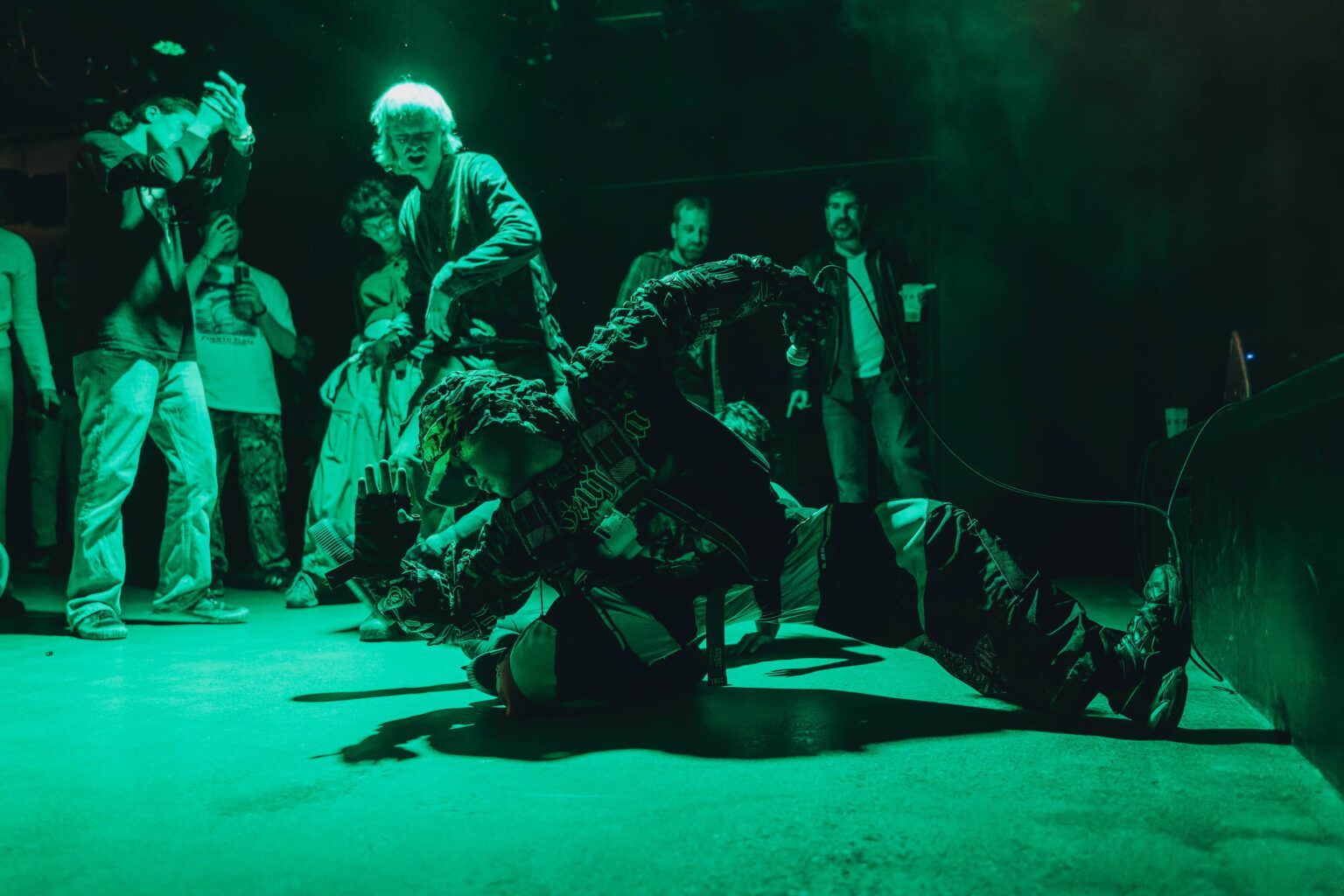
At one point during the Music Gallery show, the frenetic energy of Gabber Modus Operandi’s music abruptly slowed down, and they encouraged the audience to all sit, together, on the floor. I sat cross-legged at the back of the hall, feeling the vibrations of the loudspeakers through my fingertips. The next instant, it was over. Everyone got back on their feet, the pulse of the music as fast as ever—but in a way that was difficult to place, the feeling in the space had shifted.
In a sense, this is how I imagine Wok defines his work with Yes Now Wave Music: revelling in the daring, unexpected sort of magic that can be coaxed out of building something with others at a particular time or place. Part of it has to do with a radical sort of politics, and a commitment to a certain way of working. Another part of it is about creating musical space for and with others, bringing together people who might otherwise never have met—a multitude of perspectives moving in a similar direction at a similar time, in a way that doesn’t dilute any single part.
“Synthesis” is a good way to put it. Carving out a home through music is, too.
SARA CONSTANT is a flutist and writer specializing in new music. She holds degrees from the University of Toronto and University of Amsterdam, and currently works as the digital media editor at The WholeNote magazine and as an organizer of the Toronto Creative Music Lab. She is based in Toronto.