
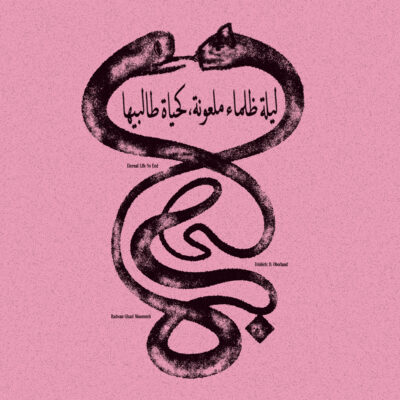
Eternal Life No End feels both ancient and acutely present. Radwan Ghazi Moumneh’s multiplicity—as an engineer and producer at Montreal studio Hotel2Tango, and as a musician adept with traditional Middle Eastern instruments such as buzuk and rababa—creates a strong fulcrum point for music that delivers a slow, deliberate descent into the elemental. For his part, Frédéric D. Oberland, a fixture in France’s experimental scene, adds layers of spectral guitar textures and percussive grit. The album continually pivots between the panoramic stillness of acoustic space and the claustrophobia of electronics, combining them to illustrate the perpetual gyre of history as it completes cycle after cycle. Moumneh’s processed Arabic vocals emerge from the spaces left between each cycle’s return, another instrument in the assemblage of stories, laments, and protests.
There isn’t a clear narrative arc, but rather a series of evocative soundscapes that feel like unearthed artifacts. Tracks unfold with a patient intensity, building tension through drones and subtle shifts in sonic density. The tone of the recording might invite the reflexive impulse to apply a political dimension to the music’s cultural vibrancy, but Eternal Life No End exists foremost as a stark, beautiful testament to the enduring power of sonic exploration. The emotions and ideas it both contains and in turn draws out of the listener speak to the art’s affective truth. It confronts, demands attention, and offers the reward of intellectual and emotional engagement.
ERIC HILL has written about music and culture for over two decades, primarily for Exclaim! His biweekly podcast, Surgery Radio, has been exploring the soft boundaries of experimental, ambient, and pop music since 2004. He has managed Backstreet Records in Fredericton for most of his adult life.