
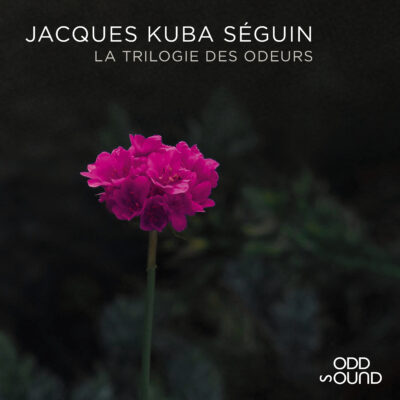
The appeal of using perfume accrues from the skill and limits of its application. Like the taste of a madeleine that led Marcel Proust to write In Search of Lost Time, the composition and evolution of perfume has led Polish-Canadian trumpeter Jacques Kuba Séguin to compose this three-CD tribute. Each CD is distinct. Parfum No. 1 features Séguin’s group of pianist Jean-Michel Pilc, vocalist Elizabeth Shepherd, bassist Rémi-Jean Leblanc, and drummer Kevin Warren; Parfum No. 2 dabs more fragrance by linking that band to l’Orchestre National de Jazz de Montréal; Parfum No. 3 amplifies the aroma as the first three players, joined by drummer Rick Irwin and bassist Morgan Moore, meet l’Orchestre symphonique de Trois-Rivières for a musical olfactory regime.
Based on extending modal jazz, the No. 1 tracks remove the precious from progressive with focused counterpoint between Séguin’s portamento expression and Pilc’s comping, amplified with bass-string throbs and drum rolls. As the trumpeter introduces heraldic shrills and brassy triplets, successive duets with keyboard pressure, metallic bass slaps, and the drummer’s gunshot-like ruffs reach a distinctive climax on “Je suis là,” until brass arpeggios weave around wordless then lyrical vocals. Dispassion widens into dynamics on the concluding “Candeur” as musical perfume is propelled everywhere while rounded brass notes spawl brightly on top of the ambulating rhythms before attaining a linear climax.
Expanded parameters from the big band mean that the soaring colours of No. 2 swell energetically from synchronized brass and reed additions, notably on “40 is the new 30.” Later, interlaced orchestral horn patterns cushion the trumpeter’s muted smears, hard drum ruffs, and energetic piano sweeps until one saxophonist’s split tones challenge Séguin’s rippling triplets while other section players echo and soften the articulated themes. On the concluding “Gratitude,” a crescendo alternates tumultuous and tranquil sequences, quickening to subtle swing with the trumpet’s grace notes surmounting carefully layered and measured group textures.
Like those who eventually learn how to apply perfume so the scent doesn’t overpower, Séguin mutes the symphony orchestra’s timbres on the No. 3 arrangements, which blend with the combo’s range. The musical fragrance sachet encompasses string section glissandi, tolling kettle drums, and mid-pitched woodwind snarls, taking on unexpected tones without altering the basic formula. “Fugue avec Anaïs (à Métis)” adapts that style expressed by mellow French horn textures at the same time as the rhythm section sticks to a jazz beat. Multiple olfactory motifs are integrated into the concluding “le cortège des fragrances—Les aléas de Mme P.,” as warmer piano expressions and trumpet grace notes harmonize with each orchestral section. The finale emphasizes the varied but non-hierarchical ingredients that were extracted and filtered to create this exquisite perfume.
Ken Waxman is a Toronto-based journalist who has written about improvised and other musics for many years. Many of his articles on music can be accessed at <www.jazzword.com>.