
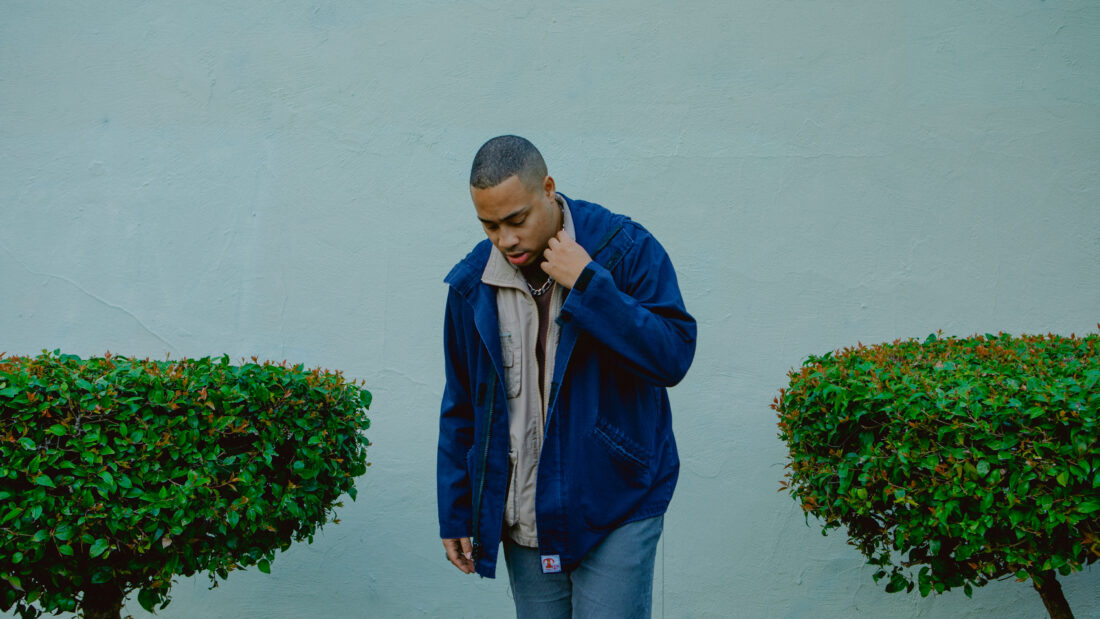
It’s staggering to think about what it actually takes to be a professional music artist in 2024. We write and record music, practise for live shows, travel from town to town, and perform for audiences. But today, it’s also de rigueur for a musician to stay up to date with industry trends and be a social media influencer who posts multiple times a week on several platforms. The latter involves navigating the changing whims of the algorithm, engaging with fans, and conceptualizing and editing content. On top of that, we must somehow maintain healthy personal lives. Speaking as a new father in the midst of an album rollout, I’ve never been more exhausted in my entire life.
This is especially jarring when you compare today’s landscape to what things were like back when I first started releasing music in the early 2000s. We didn’t have the maximum potential reach and rapid distribution that are currently available on scalable platforms like TikTok and Spotify. But we did have the advantage of strong physical print media outlets, as well as music video channels that could beam your tracks to mainstream North America. I’m from the last generation of artists to have their albums distributed and sold at the mall. That kind of mainstream market access is elusive for artists today.
The virality was a little softer and slower back then, too. Maybe you had a radio hit that picked up steam. It was nothing like today. YouTube wasn’t even really a thing yet. Social media was in its infancy. The internet was wilder, more difficult to monetize. There was more friction when you clicked to buy something. It was also the blog era, a magical time when indie artists and writers were empowered to talk about the music they loved and became industry tastemakers that were on par with mainstream music outlets in the process.
One thing we did have back then was the unfiltered ability to connect directly with our audience without having to pay for it. That’s the biggest thing that we’ve lost in recent years. Everywhere I turn, I hit artificial roadblocks, throttling my access to the very followers I brought to these platforms. You can either play the game using tricks and techniques that quickly lose efficacy as the companies learn of them, or you can pay for ads, enriching the tech companies to get the same access we once received for free.
The industry’s expectations have also changed. Back in the day, I made some music and had a few labels wanting to sign me, develop me as an artist, and release it. I had some local and online buzz, but only a modest fanbase. There were no obvious metrics to determine my popularity, other than record sales. This could never happen today. Now, if you want to get signed, labels expect you to come fully formed with a substantial social media following. You can’t even get in the door unless you’ve already had a viral hit or two. They want to see big numbers, whether they’ve been fabricated with stream farms or not. Many labels seem to be only searching for young, raw talent that already appears to be a sure thing, rather than taking a risk to invest time in developing and building strong long-term careers.
Streaming companies encourage artists to release multiple albums a year to stay relevant in the current content-ravenous era. Some of these companies would prefer to replace all creators with AI, thus streamlining content delivery to heretofore unseen levels. Proponents of AI art love the idea of taking the artist out of art, thinking that it’s the same as cutting staff at McDonald’s and replacing them with kiosks. Instead of solving world hunger, technology is being developed to replace as many creative disciplines as possible.
Fortunately, making art is not an endlessly replicable, formulaic process. Our lived human experience is what gives it the juice; without that, the AI art always feels grotesque and empty by comparison.
The old ’90s ethos “Don’t be a sellout,” along with the other countercultural messages of the time, have been replaced by the eager embrace of capitalism. It used to be gauche to put your song in a movie. Today, many artists would do a triple backflip into a giant cup of Coca-Cola if that’s what it took to be considered for an ad placement. Artists have been conditioned to think of themselves as brands for years. And as the music industry becomes more and more entangled in corporate influence, anti-establishment stances have become increasingly rare. Rocking the boat isn’t good for the bottom line, as evidenced by the silence from most artists around what’s happening in Gaza.
What I’ve written here could be a manifesto for Rollercoaster, my upcoming album. I’m passionate about the spiritual power of music and believe that another way is possible. I’ve worked on my craft tirelessly for decades. I strive to provide my listeners with quality art that will last the test of time. But as the years go by, I feel increasingly out of step with the direction the industry is taking; if you’re my age or older, maybe you feel the same way.
It would be easy to quit, move over, and get out of the way. Instead, I’ve chosen to seek out platforms where I can contact my audience directly, such as my newsletter. I’ve started to see TikTok as another creative outlet, devoting as much time as possible to artfully navigating that arena. No matter what happens with the future of music, the exceptional work will always, eventually, rise to the top. When it comes to our own art, the greater control we have of the means of production, the better off we’ll be in the long run.
ROLAND (“ROLLIE”) PEMBERTON makes music as Cadence Weapon. He was named the third poet laureate of Edmonton, his hometown, in 2009. His writing has been published in Pitchfork, The Guardian, Wired, The Globe and Mail and Hazlitt. He launched his self-titled Substack music newsletter in 2020. His memoir Bedroom Rapper: Cadence Weapon on Hip-Hop, Resistance and Surviving the Music Industry was published by McClelland & Stewart in 2022. He won the 2021 Polaris Prize for his album Parallel World. His sixth studio album, Rollercoaster (MNRK Music), was released April 19, 2024.