
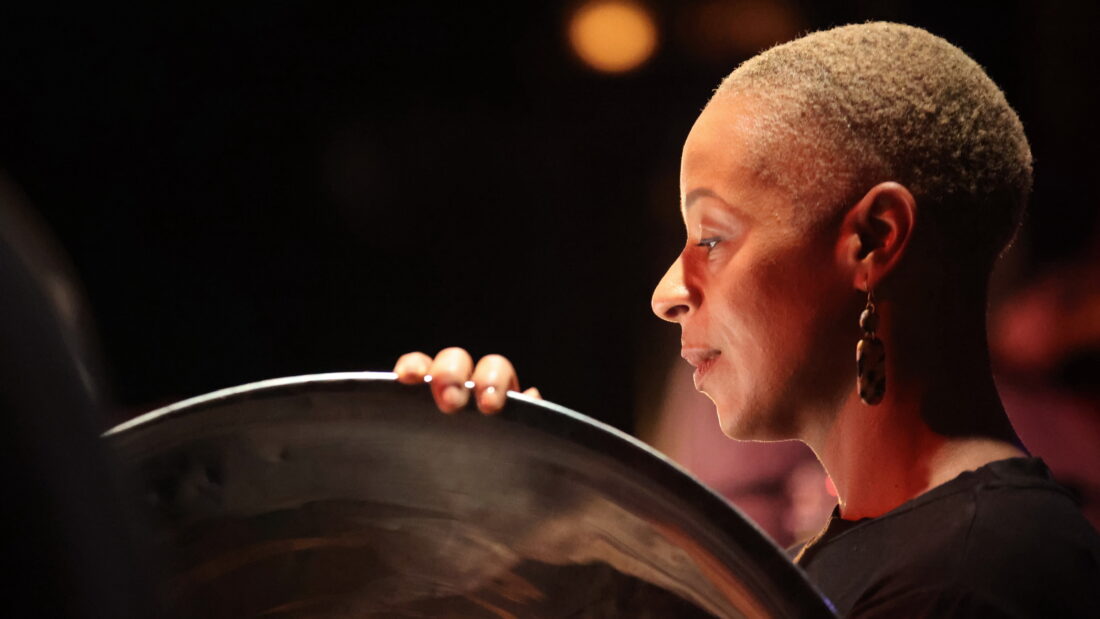
Julie Richard is a classically trained Haitian Canadian composer and instrumentalist (tuba and sousaphone) who performs across a range of styles and genres—jazz, Latin, klezmer, African, improvisation—and is active in several ensembles in Montreal, where she is based. But her passion project is uncovering and preserving the legacy of little-known Black composers, especially women, and breathing life into their forgotten works through collective creation. Ten years ago, she would type “African American woman composer” into a search engine, and each time the result was the same four names: Undine Smith Moore (1904–1989), Margaret Bonds (1913–1972), Julia Perry (1924–1979), and Shirley Graham Du Bois (1896–1977). Assuming there had to be more composers, she established Black Ark, a research and creation project focused on Black women composers and their works, in particular scores that were “not loved enough, badly preserved, and existed only in traces.”
At the beginning of Black Ark, Richard travelled to the places where these composers’ works were archived—Rider University in New Jersey, the Schomburg Center for Research in Black Culture in Harlem, Indiana University, and the New Orleans Public Library—and spoke to librarians, researchers, and people in the community who may have known or known of these composers. She looked for information in musical notations, written records such as letters, journals, and work lists, and in living memory through word of mouth, anecdotes, and remembrances. She began to notice similarities between many of these composers. Several of them had studied with Nadia Boulanger in Paris. Others had looked for ancestors in West African nations, their travel often supported by African American patrons or artists. They all wrote works commemorating civil rights marches and Martin Luther King Jr.. Richard found herself drawn to composers who created and participated in political movements.
Back in Montreal, she formed the Black Ark Orchestra, which included a diversity of musicians from the community. She chose a set of fragments from classical compositions written by four Black women who were active in the United States from the 1920s to 1960s: Florence Price, Julia Perry, Nora Holt, and Dorothy Rudd Moore. “It is a question of finding, meeting, invoking, and welcoming the works, in an attempt to restore to them, as well as to their creators, a contemporaneity otherwise confiscated. Black Ark is the ship that works through the entanglement of times and friendships and within the undecidability of absences and presences,” reads the program note for the orchestra’s show at the 2018 Suoni Per Il Popolo festival. The fragments were incomplete scores: single pages of what used to be a large multi-page work, or a sketch of something that is referred to as a piece in one of the women’s bibliographies or remembered by an acquaintance or family member. Some of these were written in pencil, smudged, or eaten by moths.
Richard and Black Ark Orchestra—which included string quartet, piano, harp, oboe, trombone, flute, clarinet, saxophone, vocals, and five percussionists, with Richard conducting—had to imbue everything they were doing with their own selves. “When we’re missing information to reorganize a score, rewrite a piece, we have to understand, to feel, to know how to find information,” Richard says. “Otherwise I’m imposing myself on the music and not acting intuitively.” Many emotions surfaced while putting the performance together, since each musician had the responsibility of bringing a voice back to life.
“I saw it like a ceremony where we were exhuming something—shining a light on music that wasn’t necessarily easy to listen to, but a kind of story that wanted to take shape,” she recalls. The result recontextualized the spirit of these traces through contemporary experience. Here were new soundings inspired by incomplete, unlikely survivals. “The idea was to create something like a musical quilt, a completely new work, but based on those materials, to bring awareness to them. I thought it was interesting to take small bits of badly preserved pieces to talk about a history that was badly preserved, erased even.”
Richard regrets that the Black Ark show was not recorded. She expected there would be many follow-up performances, which never materialized due to the pandemic. Like the traces that inspired the project, it dissolved into thin air, remembered most distinctly by those who brought it to life, hazily by those who may have witnessed it, and only by word of mouth for the rest of the community. (Ed. note: The Black Ark performance is noted in a review of the 2018 festival published on the Musicworks website.)
“The music was beautiful, but it was the feeling that mattered,” Richard says. “I tell you, all the people who were there left moved and shaken, thinking, ‘Wow, there are so many female composers whose names we’ve never heard before. Is it as easy as that to disappear despite the relevance of one’s work?’ Disappearing like that, leaving such enormous corpuses—I have a hard time imagining it.”
In recent years, greater interest in African American women composers has resulted in a proliferation of resources to preserve, disseminate, and celebrate their works. In the fall of 2020, for example, the Black Women Composers Project at Arizona State University went online, and now offers a growing number of newly available scores, biographies, and recordings of the works of, according to the website, “fifteen significant composers in the twentieth and twenty-first centuries.” Among the women featured is Julia Perry, who wrote three operas and twelve symphonies, some in neoclassical style, others with a modernist, serial influence. Many of these works were never published, none of them were copyrighted, and many were lost. The Julia Perry Working Group, which was established on the Humanities Commons website in 2021, allows scholars and other individuals to upload and consult manuscript scores and other resources held in various library and private holdings.
One significant composer not featured in the ASU Black Women Composers Project is Shirley Graham Du Bois, whose opera Tom-Tom is the focus of Richard’s most recent work—a reimagined staging of the work produced for video, which screened at the 2023 Suoni Per Il Popolo festival. A little over a decade ago, an almost complete score of Tom-Tom was “rediscovered” by American music and culture historian Lucy Caplan (then a junior at Harvard) among the composer’s collected papers, which had been acquired in 2001 by the Arthur and Elizabeth Schlesinger Library on the History of Women in America at Harvard University. (Ed. note: In contemporary articles and scholarship about her music, the composer is commonly referred to by her maiden name, Graham, which this article will do henceforth.)
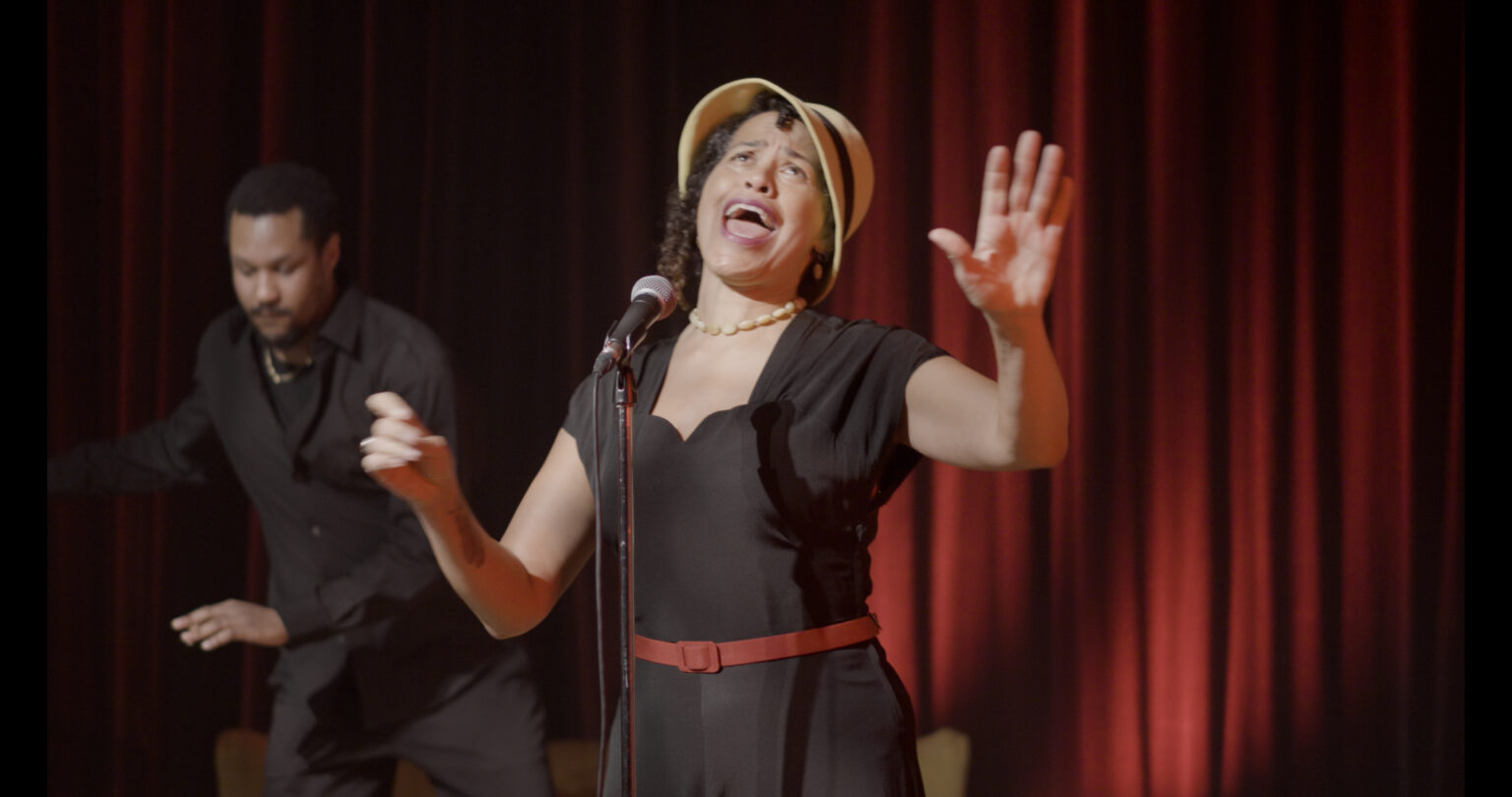
A three-act musical drama, Tom-Tom was written in 1932 when Graham was thirty-five, a mother of two sons, and studying music and creative writing at Oberlin, after having made several study-related trips to Paris in the late 1920s. Widely regarded as the first opera written by an African American woman, Tom-Tom was commissioned by the Stadium Opera Company in Cleveland, Ohio, for its 1932 summer season, and premiered to great acclaim before a weekend crowd of more than twenty-five thousand people. The opera tells the story of the African American diaspora from the perspectives of four archetypal characters: the Girl, the Boy, the Mother, and the Voodoo Man. It careens through more than three centuries of history, both social and musical. Beginning with a ritual ceremony in a village in West Africa, the opera depicts the capture of people by enslavers, the journey to American plantations, liberation, the Harlem Renaissance, and dreams of returning to Africa. The musical style also varies throughout the work, moving from tribal chanting and drumming with West African melodies to choral spirituals, operatic repertoire, modernist orchestral writing, and the early days of cabaret and jazz and the sounds of city life. The score even calls for an elephant to appear onstage, and for its sound to be created musically with percussion polyrhythms. For the premiere production of Tom-Tom, Graham involved local church choirs and organized a contest that offered cash prizes for the “best full set design submitted by a Negro for use in the opera.”
In a blog post published on the website of the Caramoor Center for Music and the Arts (located in Katonah, New York) before a 2020 concert of excerpts from Tom-Tom, Caplan wrote, “One critic called it a ‘revolutionary project.’ Another deemed it an ‘opera which marks an epoch in the history of creative music in this country.’ A third proclaimed that it was ‘new opera. Something different from what has preceded it in history.’ Yet despite the immense success of its first production, Tom-Tom disappeared from the stage.” Compare, for example, the lasting popularity of Porgy and Bess, an opera about Black life written by three white men three years after Tom-Tom: A new production created for the Metropolitan Opera’s 2019–2020 season smashed box office records.
In her lengthy article about the work in the Spring 2006 edition of Black Music Research Journal, American musicologist Sarah Schmalenberger points to many factors that led to the work’s disappearance, such as the Great Depression, Graham’s loss of rights to the work, and her political activism and communist ideology, which caused the American government to label her a subversive radical. Tom-Tom is not Graham’s only important work. Her output includes plays that counter white versions of history with a Black woman’s perspective, musicals that synthesize a wide richness of styles and techniques, and sociological and biographical books for both adult and young readers. She also influenced the work of noted sociologist and civil rights activist W. E. B. Du Bois, her second husband, and was consulted by Malcolm X. In her sixties, she lived in Ghana, then moved to Egypt, and finally China, where she died. Wherever she lived, Graham was involved with communities, helping people and causes, and was honoured for this in her lifetime.
Richard, who is in her forties, is a community builder as well as an artist, and is inspired to continue this work by the legacy of Graham—who continued her creative, activist, and community leadership activities with vigour to the end of her life. During the pandemic, Richard worked with seniors at residential and long-term care centres and also with at-risk youth, and created an online songwriting project that brought these groups together. I first learned of Richard’s work through that project, which she describes in detail in a video on Access produced by the Canadian New Music Network for its 2021 online forum Listen Up! (I am the CNMN executive director, and Richard serves on its board.) Like so many of the women she studies, Richard has travelled an interdisciplinary journey that has led her to work in the fields of artistic management, intervention psychology, and cultural mediation alongside her curation, creation, and research. As a 2023 Suoni Per Il Popolo festival curator, Richard brought together a lineup of talent that featured many artists from the immediate and regional scenes, including voices from the margins of identity, aesthetics, or economy.
“What I want to show is that we can carry huge projects forward and invest ourselves in our own missions,” she says. “It’s a kind of care. I can’t count on society to bring me works I would like to see. It’s up to me to put them together. We don’t have to fit in with large-scale presenters because we’re presenting music that has a classical character or because we’re putting something on that’s called an opera. We can keep it accessible, but really accessible. And find ways to invent ourselves artistically so that people and works can travel easily in Quebec.” It’s challenging work, and she has taken some hits, and now she is keen to continue working “more gently, but in love,” she says.
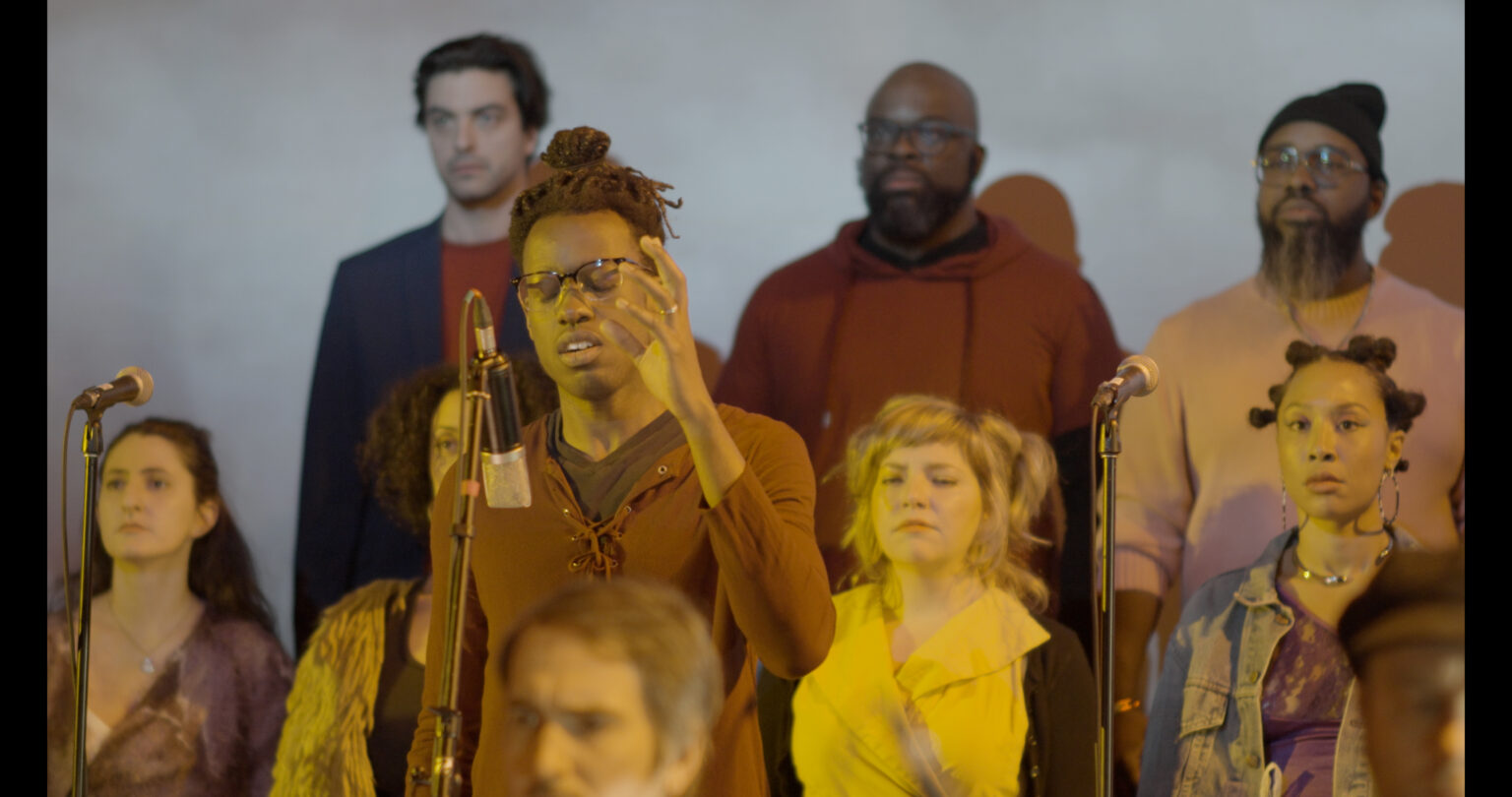
The way Richard is bringing Tom-Tom to life is filled with this kind of care and attention. Her new ensemble, Les Angles Mortes, includes artists from many different genres and circles, and each musician— many of whom were members of the Black Ark Orchestra—was hand-picked by Richard to recreate this opus and is invested in the process. Such a resurrection of a monumental work must be a collective effort—an ethos that she shares with Graham. A concert performance ended up being too challenging to undertake, so Richard decided on a video version that could be circulated easily and have the widest reach, and also be a proof-of-concept stepping stone toward a complete reconstruction, closer to Graham’s original staging notes. Richard intends to work toward securing funding and finding the time to put together a fully staged version in the future.
The name of her current ensemble, Les Angles Mortes, is a feminized translation of “the blind spots,” which Richard recently learned about during driving lessons. “I’m always in the blind spot,” she says. “We’ll be the Angles Mortes, those women who will always be in the wrong place, who won’t be seen or will be avoided. You have to make a conscious effort to look out for them, listen to them, digest them.” The members of Les Angles Mortes invested themselves musically and personally in the project, confronting many emotions and biases. “There were people who had never had a woman with a baton in front of them, for starters,” Richard says. “There were people who had never had a woman of colour in front of them with a baton. So it takes time to get everyone comfortable with that, and to admit it, to deal with the discomfort. In theory, we don’t have judgements, but then finally, we arrive in practice, then we say to ourselves, ‘Wow, I’m biased.’ As long as we aren’t confronted, we don’t understand our biases, and we don’t understand our reactions, because we haven’t experienced or felt them in practice.”
Richard is protective of her work. Performers outside the mainstream or from the diaspora are often criticized, she tells me, which is why she presents her work in smaller venues in front of supportive audiences. I was excited to witness a first public screening and participate in an evening of celebration of Julie Richard and Les Angles Mortes’ Tom-Tom on June 3, 2023, at the Sala Rossa during the Suoni Per Il Popolo Festival, co-presented by Arts in the Margins. I bought tickets as soon as they dropped, eager to have my first experience both of Richard’s exploration of Black American women composers and of Graham’s opera. The Sala filled up quickly, and I overheard many musicians describing their experience participating in the video’s creation, which made me realize just how many people Richard had brought together. Finally, Richard appeared in the crowd, buzzing around the many well-wishers before taking to the stage to welcome everyone. The fifty-minute video began with a drum ensemble surrounded by circling dancers reminiscent of a tribal ceremony, then moved through pieces for vocal and instrumental groups, and even a small orchestra conducted by Richard. Each ensemble had a distinct character, just like the music they were presenting. This could easily have been a showcase of different composers from various time periods. When the screening of Tom-Tom ended, a couple of the opera’s cabaret numbers were performed live. Happy Feet brought a smile to everyone’s face as Kim Zombik (voice), Vithou Thurber-Prom Tep (piano), and Anthony Pageot (drums) were joined by tap dancer Tesfa Llewellyn. Many performers featured in the film stayed afterward to dance to the tunes of DJ Andy Ex.It felt like something extraordinary had been released into the world. And yet questions continue to bubble up, in particular: What would it be like to see Tom-Tom staged in its original splendour—on a sprawling stage or on the field of Olympic Stadium—and what would it take to get it there?
TERRI HRON is a musician, performer, and multimedia artist. Her work explores historical performance practices, field recording, invented ceramic instruments, and videoscores. Hron studied musicology and art history at the University of Alberta, historical and contemporary performance at the Conservatorium van Amsterdam, and electroacoustic composition at the Université de Montréal. She is the executive director of the Canadian New Music Network, where she has developed programs that focus on pluralism and sustainability.