

In February 2021, while I was conducting post-doctoral research on the history of anti-Black racism in the Canadian music industry, Jeff “J-Spade” Duke of the Toronto rap group Citizen Kane suggested I talk to Michele Geister, creator of MuchMusic’s ground-breaking Canadian television program, RapCity. Through the development, launch, and evolution of the long-running RapCity, Geister played a significant role in building a national audience for hip-hop, despite institutional barriers that hindered the growth of the country’s hip-hop market and infrastructure at that time. I was surprised to learn that while her contribution has been acknowledged over the years by many Canadian and American hip-hop practitioners—she is thanked in the liner notes of Public Enemy’s game-changing 1990 album Fear of a Black Planet, for example—the full impact of her work had not yet been fully explored. The fiftieth anniversary of the birth of hip-hop, and the current conversations about Canadian hip-hop history, seemed an appropriate moment to reconnect with Geister to find out how a young woman from Stratford, Ontario became one of the first to envision the Canadian hip-hop nation.
Hip-hop was “born” on August 11, 1973, at 1520 Sedgwick Avenue, New York, at a back-to-school party hosted by sixteen-year-old Jamaican American DJ Clive “DJ Kool Herc” Campbell and his sister Cindy. Like many young New Yorkers, the siblings were early movers in a cultural phenomenon that gained commercial traction by way of the Sugarhill Gang’s 1979 single “Rapper’s Delight,” which Toronto fans could only hear on Buffalo’s WBLK-FM radio station. In 1983, Toronto’s hip-hop community finally got its own local broadcasting space—Fantastic Voyage, a college radio show on CKLN-FM hosted by DJ and hip-hop promoter Ron Nelson. The show hosted the first major rap concert in Canada and generated a platform for local and international artists to perform their music—notably in the “Monster Jam” rap battles at the Concert Hall, which pitted local artists against hip-hop stars from New York City. By then, the era of visual surplus was in full effect. MTV, which launched in 1981, introduced the concept of twenty-four-hour music television. Producers at Canada’s MuchMusic, which launched in 1984, provided audiences with blocks of music videos and original content centring on Canadian musicians. Music labels ramped up the production of music videos—their most powerful promotional tool.
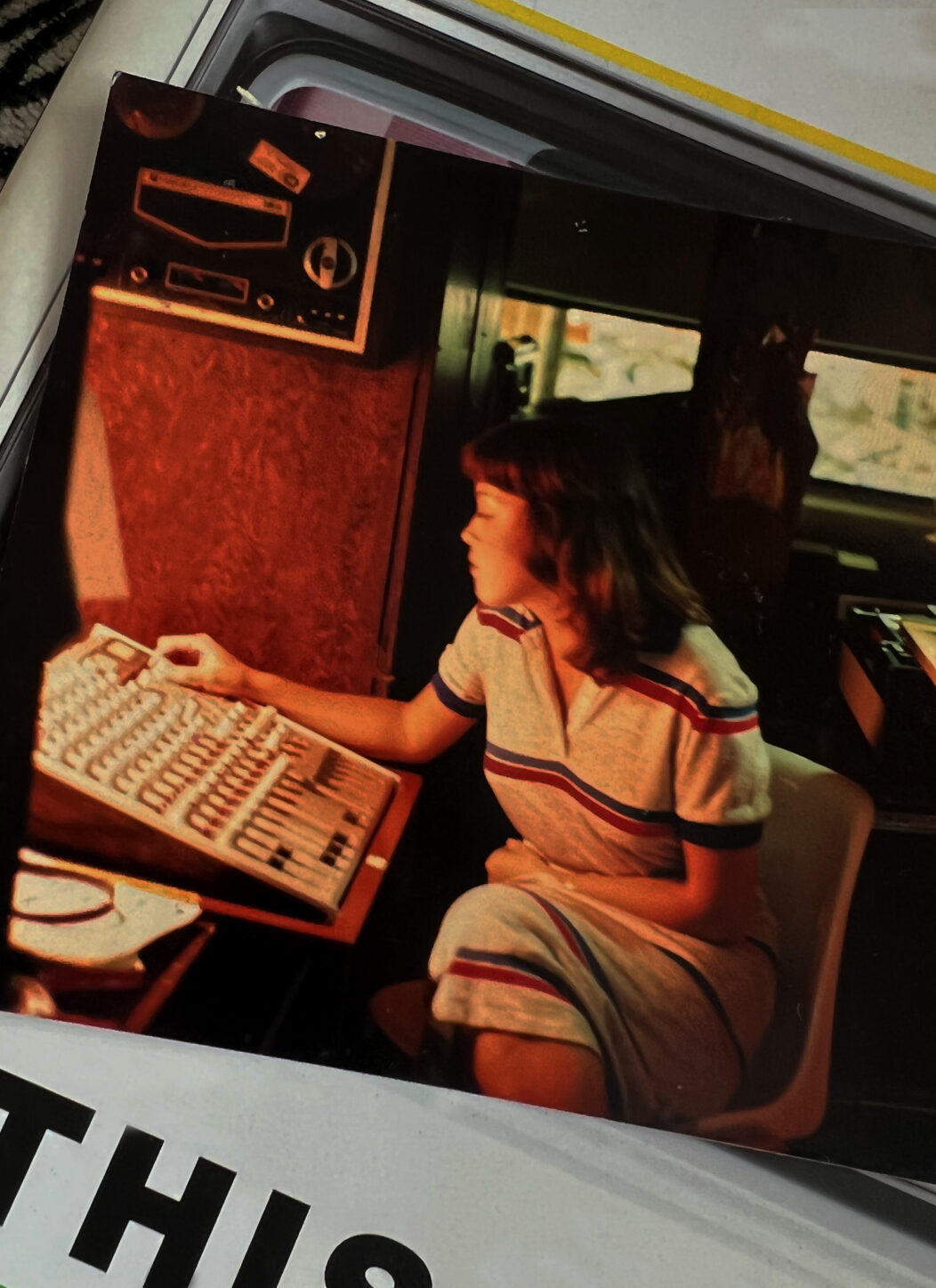
Four blocks from the building where Fantastic Voyage was recorded, Geister—who wrote her thesis on music television during her final year in Conestoga College’s broadcasting program—was living in a three-storey Victorian house with eight roommates. In 1985, after working as a videotape operator at the Sports Network, Geister joined MuchMusic and immediately demonstrated her technical knowledge. She worked twelve-hour days manually colour-balancing cameras, monitoring video levels during live eight-hour tapings, recording to huge one- and two-tape reels, and playing the tape back in sync to ensure that operators had not missed capturing any content.
After meeting Michael Williams, MuchMusic’s only Black VJ (video jockey), Geister’s role at MuchMusic blossomed. Williams wanted to transform his former Montreal radio show, Soul in the City, into an hour-long television series and enlisted Geister to edit, produce, and direct it. When Soul in the City first aired, there were no programs on Canadian TV dedicated to the full range of Black music that was available in the marketplace. During this time, Geister also produced MuchMusic’s first hour-long hip-hop special, which featured a segment on Jamaica-born Canadian emcee Michie Mee and captured her recording at Toronto’s Wellesley Sound Studios. “I tried to give artists copies of [their] Soul in the City appearances to use for their own purposes,” Geister explains. “That kind of footage wasn’t something everybody had access to in those days. They needed resources.” Geister later learned the special had helped cement Michie Mee’s deal with First Priority, an independent hip-hop label distributed by Atlantic Records, making her the first Canadian emcee to sign with a major American label.
MuchMusic director of programming John Martin soon realized that one hour wasn’t enough time for the station to present the range of Black music that Geister and Williams hoped to cover. Geister was tasked with developing a rap-focused show, and in September 1989 MuchMusic launched Canada’s first nationally broadcast series about hip-hop culture. Initially a half-hour show airing once a week, RapCity soon began airing five days a week and became one of the station’s best-known internationally syndicated programs, although it did not have as large a production budget or team as other shows. As the associate producer, Geister created or oversaw most elements of the show: selecting and researching content, writing scripts, choosing locations, booking talent, conducting interviews, producing the host segments, directing the live show, editing, and generating interstitials in post-production.
As the program developed, it quickly gained a reputation among hip-hop practitioners as the place to garner respect at the local level and secure national and international visibility. After the release of Michie Mee’s 1991 album Jamaican Funk–Canadian Style (made in collaboration with DJ L.A. Luv), Geister joined the emcee on the road to record interviews, clips of live performances, and other footage. Geister often roomed with Michie Mee and ended up providing the young artist with ad hoc media training. Geister recalls when Michie Mee took the stage at Sting, Jamaica’s popular one-night dancehall festival: “It was crazy! Forty thousand people. The Jamaican audience was looking for hardcore dancehall DJs to perform. Everyone was concerned that the crowd would throw bottles if they were displeased. Michie didn’t [do an emcee] battle, but she did a showcase. She was fearless.”
Toronto emcee Dan-e-o remembers touring Canada for the notable Canadian hip-hop compilation album Rap Essentials Volume One (1996, Beat Factory / EMI), which included his track “Dear Hip Hop,” now a Canadian classic. Audiences already knew the song because of RapCity and MuchMusic, he recalls. “When RapCity debuted [the video for] “Dear Hip Hop,” it was played at the end of the show after a Shaquille O’Neal video. I just remember thinking, ‘You got this NBA superstar and little old me back-to-back on RapCity.’ That’s what RapCity did: It sort of levelled the playing field. It helped the nation see artists, both independent and signed to majors, and it helped make stars out of Canadian artists.”
Since many rap artists did not have the resources or label backing to create videos, Geister established a different set of criteria for RapCity. Impressed after catching Toronto emcee Jelleestone perform for the first time at a local hip-hop competition, Geister invited him to be interviewed for the program and perform live-to-air freestyle. “I wanted to support his high level of talent by providing in-studio opportunities to get his name out there before he even had wax,” Geister says. “Being on RapCity gave artists exposure, a profile, and credibility—it was an indication that they had made it.” At the time, Jelleestone had not released his music, or a music video. “Inviting me to RapCity validated the underground movement and made it real to the masses,” Jelleestone says. “It gave me more confidence and the conviction to go forward in my craft. It opened many doors for me and for others, and was an integral building block for the art form in Canada [and for] its representation internationally.”
Fans craved RapCity, watching the show via basic cable, satellite feed, or even bootlegged VHS tapes. “I would try to get home in time to watch RapCity after school or work,” Dan-e-o recalls. “I would sit there, remote control in hand, ready to record whatever music video was coming on next. [I made] my own video mixtapes—they were entitled Hip-hop Vision. I have [them on] VHS cassettes, all six hours in length, spanning from 1988 to 2004. I was a straight hip-hop recording nerd. I would type the names of the tracks and the artists and place that folded piece of paper on the inside of the box of those VHS cassettes. RapCity was my go-to source for whatever new album I should go check out.”
Geister’s efforts extended to hip-hop’s adjacent industries, particularly fashion, and specifically the work of Toronto brand Too Black Guys. “The culture wasn’t just about being on a microphone,” she says. When American rap group Leaders of the New School was booked to perform live-to-air on RapCity, Geister asked Too Black Guys co-founder Adrian Aitcheson to bring the brand’s work to MuchMusic, and the group was filmed wearing Too Black Guys’ T-shirts during their performance. Too Black Guys soon started dressing R&B superstar Mary J. Blige and Hollywood director Quentin Tarantino. Geister and Aitcheson even styled music videos. “He really brought this b-boy aesthetic [to Canadian music videos] that we hadn’t seen yet,” she says.
Geister envisioned the Canadian hip-hop industry before it existed, using the phrase “Canadian Hip-Hop Nation” as the title of an early RapCity segment that profiled cross-Canada news and event listings. She saw hip-hop as an ecosystem of creatives, and recognized that Canadian hip-hop needed to develop an industry infrastructure akin to that of the American music market. Well before Julien “Director X” Lutz (formerly Little X) became Canada’s most prolific music video director, with over one hundred music video credits to his name, Geister spotted his visual talent in a sketchbook he had with him at a rap show and asked if he was interested in interning at RapCity. He tagged along with the RapCity team to New York City to film an interview segment with Gang Starr’s Guru. “I didn’t have the budget, but I told [Lutz] if he could get to New York City he could come to the interview,” she recalls. “He took the bus and stayed with his aunt. We were in Brooklyn on [Guru’s] Jazzmatazz video shoot, and somehow, he ended up speaking to the famed Hype Williams, who was directing—and he had that sketchbook.” Lutz ended up becoming Williams’ storyboard artist.
While hip-hop was becoming more popular among Canadian audiences, record companies and mainstream media in both the U.S. and Canada were not so eager to promote or cover the music of its local or international artists. Some industry gatekeepers were even known to have circulated narratives that described rap with violent and misogynistic stereotypes. Geister and RapCity host Michael Williams countered this by following local talent and nurturing relationships with those American record labels that were eager to send MuchMusic their newest music videos.
Says DJ Ron Nelson, who worked closely with Geister on the coverage of the events he promoted, “[She] thought outside the box when it came to staying atop new musical shifts and trends. She was the MuchMusic connection to the streets, and whether it was recruiting local and international talent or going into the field to get footage from our most shining local artists, somebody had to be stationed on the front lines, and that was Michele.”
Geister recalls when her roommate, a college radio DJ, introduced her to Long Island rap group Public Enemy. “He bought this twelve-inch titled ‘Public Enemy Number One’ and played it on CKLN later that day. I got it the next day, and shared it with a MuchMusic colleague who wrinkled his nose. But I didn’t need anybody’s validation. I championed [Public Enemy] at MuchMusic [because] that was what people wanted to hear.” Fear of a Black Planet, the band’s third album, ended up charting in Canada.
“Michele Geister was one of the first people in major media to highlight Public Enemy on television,” says Public Enemy frontman Chuck D. “In Canada, her seriousness to detail was a step beyond how the U.S.A. handled hip-hop and rap. MTV was distancing itself from considering the art form mature and legit beyond teens, [and] BET [Black Entertainment Television] was non-existent in that dialogue as well. Michele projected a thorough respect of the genre as a craft to be televised in high-curated regard.”
MuchMusic executives eventually added Geister to the station’s programming committee, where she participated in the decision-making process. The committee met every Tuesday to review visuals and lyrics for any derogatory NFB (not fit for broadcast) content and ensure that the videos adhered to the Canadian Radio-television and Telecommunications Commission (CRTC) standards. Once a video was cleared, MuchMusic’s producers determined whether it went into rotation and what level of rotation it got. “Videos could be approved for airplay but wouldn’t be approved for mainstream rotation,” she explains. “It was up to the specialty shows like RapCity to play them.”
The programming committee gave Geister a front-row seat to witness how rap music was disproportionately subject to greater scrutiny over concerns that the content might be disruptive, sexist, or violent. “I identified things that I felt were systematic racism. I know Black music had a huge fight,” she says. These attitudes persisted for years after MuchMusic’s debut. Based on what she witnessed and experienced, Geister felt that some American and Canadian music industry executives regarded hip-hop as a fad and were only interested in how they could exploit, suppress, or control the music’s messaging. “Although hip-hop had a lot of enthusiastic supporters across the country, there were always detractors trying to shut it down or control it or make it what they thought it should be as opposed to just letting it be authentic and organic.”
Geister recalls how one MuchMusic executive proposed that the station stop playing rap after news of a violent incident at an American rap show. “I stood up to say, ‘That’s crazy. You can’t do this. This is pop music. It’s crossing over. It is dominating. This is here to stay.’ The perspective that [the music] is negative and violent and something to be afraid of—I knew that narrative needed to be changed.”
“Michele’s commitment to hip-hop culture was both genuine and necessary,” notes Tony “Master T” Young, who became the permanent host of RapCity in 1993. “She managed to take voices and artists that didn’t sell fifty thousand records in this country, give them a platform and an honest and true voice to display who they were.”
While MuchMusic was notable as a place where employees could push creative boundaries, Geister says it was a hard place for a young person to work. “I never received any encouragement or praise for originating programs that were considered pioneering and revolutionary. It was a culture that you just had to accept in order to be able to do creative work. I never knew that there was any recourse to deal with some of those experiences.” Geister also had detractors. “They saw what I was doing and were like, ‘What’s this white girl doing?’ without knowing that it was my labour that birthed these programs.”
Nelson explains that Toronto’s first wave of ’80s and ’90s hip-hop concerts were attended mostly by Black audiences, and that many were “fortified by a sense of entitlement because it was their music and their culture—and their safe space, where white people and white media didn’t belong. These audiences were distrusting as to why white people were choosing to share their space. This didn’t stop Michele, who seemed fearless in throwing herself into these event environments time and time again because of her love for the music, her dedication to her job, and because she knew that there was an opportunity to capture history as it was made.”
Despite this, Geister and other senior staffers were deemed redundant by MuchMusic in the mid-1990s, and in 1995, the station cancelled the show she had built. Geister moved to Jamaica in the fall of 1996. “I didn’t want my children to grow up with a North American mindset,” she explains. She became a transformative voice in Jamaican media, developing a morning show, a fashion industry series, a cuisine show, and the island’s first reality TV show. Today, Geister’s role in the lives of artists is closer to home. Her daughter is a budding film director, and her son is a three-time Grammy-nominated reggae producer currently working on his debut solo project. “My life really took a shift from nurturing young Canadian artists on a professional level to doing it personally,” she says. In addition to occasionally consulting Jamaican musicians, Geister lives in an off-grid community that trains the public in regenerative agriculture, permaculture design, organic farming, and utilizing plant medicines as a form of healing.
While she has lived away from Toronto for nearly three decades, Geister regards her time immersed in hip-hop as key to her education and understanding about social justice. “I was fortunate to have personal conversations with artists who were community leaders of a whole movement,” she says. “Hip-hop blessed my life in a way that I could never have imagined. I am where I am in terms of my consciousness, and even my spirituality, because I experienced things that someone of my background might not have ever been exposed to. I took what I did with a great deal of responsibility.”
Francesca D’Amico-Cuthbert is currently completing her Ph.D. on the history of black liberation and urban American music. A lover of the arts, she is a trained singer, dancer, and poet. She is currently producing the feature-length documentary Colouring Book: The Mixed Race Documentary.