
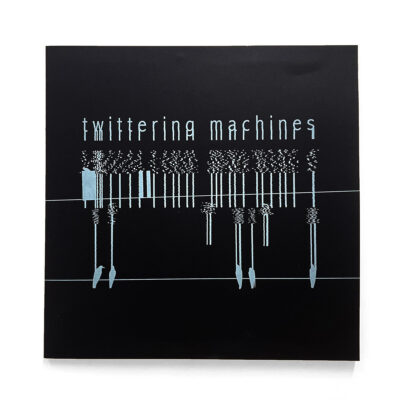
The endlessly inventive composer and sound artist Kathy Hinde has long sought inspiration in the natural world. In this way, the British artist imbues her work with a connection to nature that, as Twittering Machines demonstrates, is deeply alert to the dangers of the ecological and climate crisis. Inspired by cellist Beatrice Harrison’s 1924 recording of a nightingale singing along to her cello, Hinde’s work is also a duet, albeit of a different type. While Harrison’s recording hinted at a harmonious relationship between human and bird, Hinde’s work is clear-sighted about the damage humans are causing to the natural world.
In Twittering Machines, the endangered nightingale is always at an arm’s length to auditory experience. Hinde starts with a specially created dubplate, a Morse code transcription of John Keats’ “Ode to a Nightingale.” As the code taps out, bespoke software tries (and fails) to recreate the bird’s song. The failure is intentional, for it’s here that Hinde’s lament for the nightingale lies. Although Twittering Machines began life as an audiovisual performance at Mutek Montreal in 2019 (it’s worth checking out the clips on Hinde’s website to get a bigger sense of the piece), an audio-only experience of it is deeply rewarding. Hinde’s subtle layers of sound—from Morse to music boxes, birdsong toys, and singing bowls—create a ghostly, shimmering work. It ends as it begins, with Morse, only this time, the tapping slows and eventually disappears, making this less of an ode and more of an elegy for a nightingale—and an urgent call for action.
Louise Gray is a U.K.-based music critic who writes regularly for The Wire, The Arts Desk and New Internationalist. She is also the author of The No-Nonsense Guide to World Music (New Internationalist).