
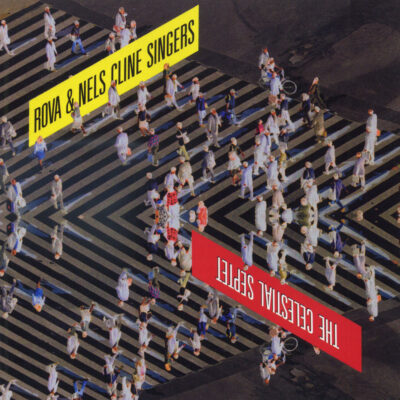
The Celestial Septet combines two institutions of California’s experimental and improvised music, the ROVA Saxophone Quartet and guitarist Nels Cline’s instrumental trio with bass and drums, ironically named the Nels Cline Singers. This music is rooted in the free-jazz revolution of the mid-1960s, the ROVA saxophones liberated by the driving presence of the Cline rhythm section. The centrepiece here is a twenty-five-minute performance of tenor saxophonist Larry Ochs’ Whose to Know, dedicated to his original inspiration, Albert Ayler, who before his death in 1970 galvanized jazz with an eerie mix of lachrymose balladry, marching band tunes, and gospel music—all welded together with anarchic, high-speed free improvisation. While Cline’s virtuosic guitar is the central solo presence here, drummer Scott Amendola and ROVA set up a wall of thrashing drums and overblown saxophones that’s at once ecstatic and apocalyptic. Other highlights include alto saxophonist Steve Adams’ Trouble Ticket, with explosive, cascading lines in fractured rhythms, and Cline’s The Buried Quilt, in which he and Amendola provide waves of electronic signal processing that intersect with the ROVA saxophones. Drawing inspiration from Sun Ra and his Arkestra, Coltrane, and Ayler, The Celestial Septet seems to insist that their music be accepted as invocation and tool of the spirits.
Stuart Broomer has written extensively on music, mostly improvised, for both general and specialist publications, and his liner essays have appeared on CDs by musicians from some 20 countries. The author of Time and Anthony Braxton (Mercury, 2009), he is currently writing a fantasia on the life of Memphis disc jockey Dewey Phillips. He has been intermittently active as an improvising musician since 1965; his composition Found Theme for the Age of Reason appeared in Musicworks 112. He lives in Toronto.